A group of people gathered indoors, holding festive items and posing cheerfully in a modern lounge.

Short-Term Assignments in Singapore: What You Need to Know

October 28, 2022
They’re all over social media: laptop in one hand, fresh coconut in the other as they work beachfront in an exotic location. In addition to their photo-taking skills, there’s a lot to potentially learn from these digital nomads - individuals who travel place to place while working a full-time job from wherever they go. If you also travel for work, especially for extended periods of time, it may be a good idea to look to these fellow travelers (so to speak!) for trips and tricks.

Like many extended stay business travelers, you may find yourself staying in a serviced apartment, such as those offered by Synergy Global Housing. You’ll have everything you need for a long-term stay: furnishings, a full kitchen, housewares, linens, 24/7 guest service and more. However, there’s always room to make your business travels even more efficient, comfortable and productive.

We’ve rounded up numerous resources that digital nomads love, divided into categories, that business travelers like you can benefit from as well. Take advantage of them on your next trip.

From the Diary of An Assignee in Singapore — Series Two

Welcome back to series 2 of 3 of the diary of an assignee in Singapore! In case you haven’t read the first series yet, I’m Laura and I’ve been assigned to live and work in Singapore for a month. I’ll be using this platform to share my experiences with those of you lucky people who might move to Singapore for a short-term stay assignment, relocation or business trip in the near future, sharing my experiences challenges and tips along the way.  

Ready? Let’s get into it.  

Two weeks or two years?

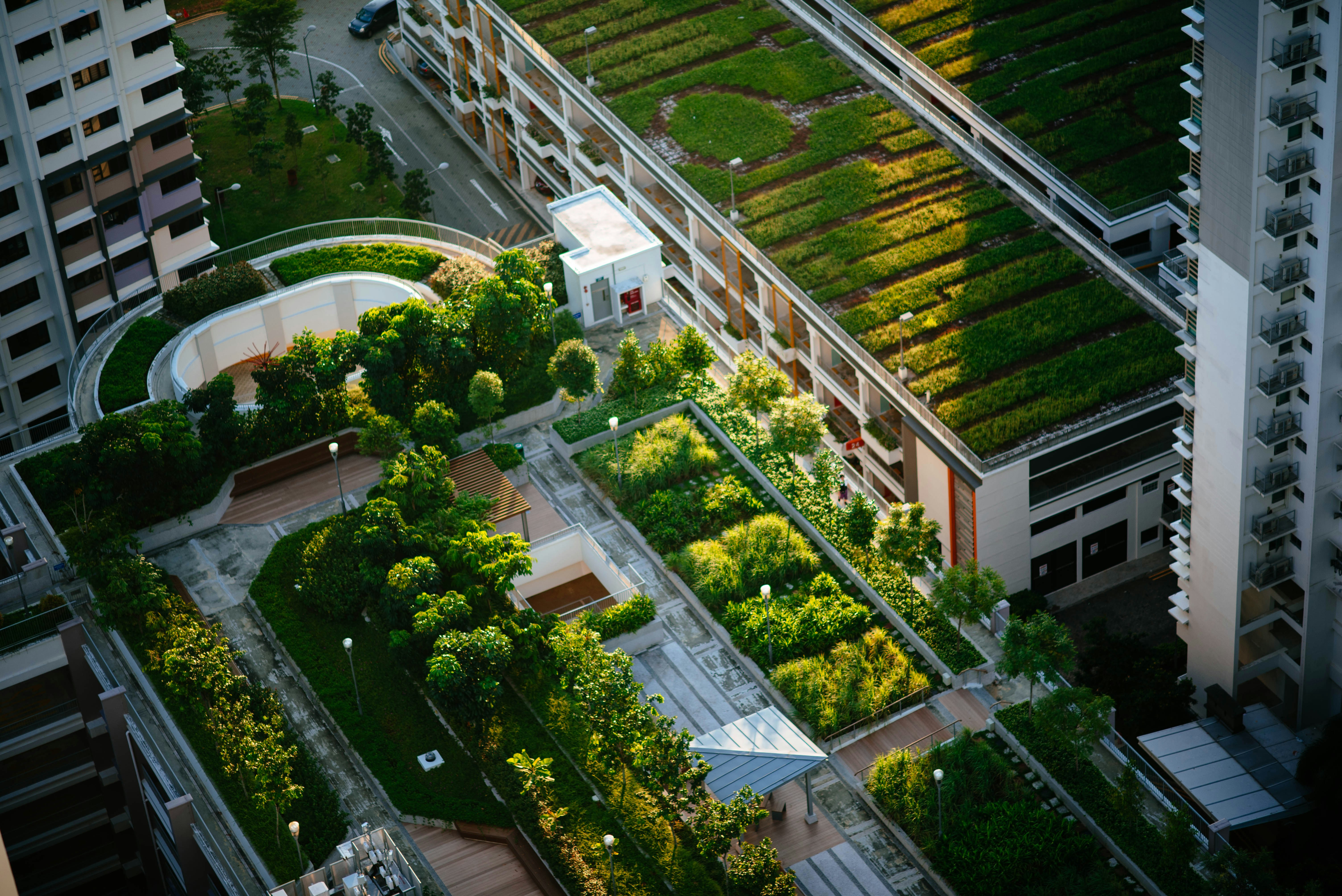
So I’m officially two weeks into my trip already (time does fly when you’re having fun), and I can’t quite believe how fast I’ve settled in. I think it’s because life in Singapore is just so…livable. It’s a small city. It’s clean. It’s safe. It’s easy to get around. The standard of serviced apartments in Singapore is excellent and there’s a thriving expat community. It’s essentially a business traveller’s haven here.  

Woman in a blue dress stands on a balcony overlooking a cityscape with greenery and tall buildings.

First thing first— get yourself connected

If you’re moving to Singapore for business, regardless of the duration of your stay, I’d 100% recommend you buy your own sim card.  

Whether you’re mapping yourself to a new office for a meeting or ordering a Grab (Singapore’s equivalent to Uber) to avoid any heavy downpours of rain on the way to a business meeting, or gaining access to an office building as a visitor, you’ll find it a hell of a lot easier if you can do it all without relying on WiFi. You can rely on the WiFi across the city if you’d prefer, but for the sake of efficiency and avoiding running into any challenges prior to a business meeting, my recommendation is don’t take any chances and just get yourself a sim— punctuality to business meetings is important in Singapore.  

You can get your sim card from the airport when you arrive, or you can do what I did and get one from any 7Eleven which offers a much better deal. I paid $15 for mine which gave me 100GB of internet for 28 days with a provider called Singtel. 7Elevens are everywhere, so it's highly likely you’ll find one just steps from your serviced apartment in Singapore.  
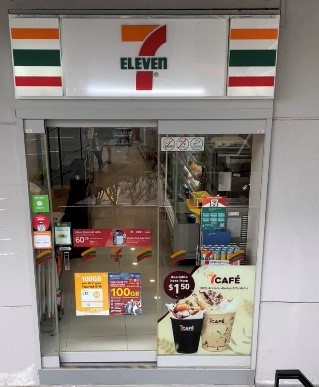
Entrance of a 7-Eleven store with promotional posters and glass doors displaying interior items.

Brush up on your office etiquette  

My first two weeks living in Singapore have consisted of meeting a lot of different people, whether that be the Synergy APAC team, visiting our client's offices, or meeting our supply chain partners and their wonderful apartments across the city. To say I have seen a lot of what I read online about office etiquette and life in Singapore come into play here would be an understatement— below are the essentials you’ll need to know when moving to Singapore for business.  

Hierarchy is everything—everyone has a distinct place within businesses in Singapore, and the seniors must always be treated with the utmost respect. The same goes for expats in Singapore. Some tips include:

  • Always let the person with the highest rank make the initial introduction, let them take the lead at a business meeting and follow suit.  
  • At a business dinner, don’t pick up your cutlery and start eating until the most senior person at the table has done so first.
  • Avoid giving overtly negative feedback, especially to a senior— saving face is very important in Singapore.

The handshake is a common greeting, and adding a slight bow will be appreciated.

Always be on time— punctuality is essential.

Office wear is your typical western, smart-casual attire, but be sure to check with your company first as some offices prefer to be more formal than others.

A group of people outdoors posing with peace signs near a modern urban setting and parked cars.

Business cards are a very important part of doing business in Singapore. You should take and receive the card with both hands and take a few seconds to observe the card.

Gift-giving is big here. When you present and receive a gift, make sure to do so with both hands. If you are receiving a gift, don’t open the gift until the gift giver leaves.  

Office hours are usually around 9-6pm or 7pm. The Singaporeans are hard workers, but they do also make use of their lunch hour, typically with a large meal.

Business is typically conducted in English, but be prepared to hear many languages spoken in the office, including Mandarin Chinese, Singaporean Chinese, Malay or Tamil. Due to the mix of cultures in Singapore, you’ll likely also work alongside many Buddhists, Muslims or Christians and should be respectful of any religious standards they practice.  

“Singlish” is common—and you’ll probably struggle to understand it! One thing that definitely caught me off guard was Singlish (a mixture of English and Chinese/Malay). I had heard of it. I knew what it was. But my goodness did I underestimate how little I would understand. You can brush up on your Singlish here, lah.  

Bring Your Appetite  

So you’ve navigated your first day in the office, you’re feeling a little bit peckish and to your pleasant surprise, you’ve found that Singaporeans love food just as much as you do—seriously, there are an obscene amount of eateries here.  

Serviced accommodations in Singapore are usually fully furnished and come with a fully-equipped kitchen or at least a kitchenette. This is great for anyone looking for that added flexibility to eat in and out as and when they please, but it goes without saying that it’s an absolute must you try the local food as an expat in Singapore. It would be rude not to, right?

Where to find the best eateries when living in Singapore

Everywhere. They’re everywhere. On side streets, underground, in shopping malls, dedicated food courts and just about everything in between. You’ll be able to find something for pretty much everyone, and with any budget, within steps from your office or serviced apartment in Singapore.  

Hawker Centres

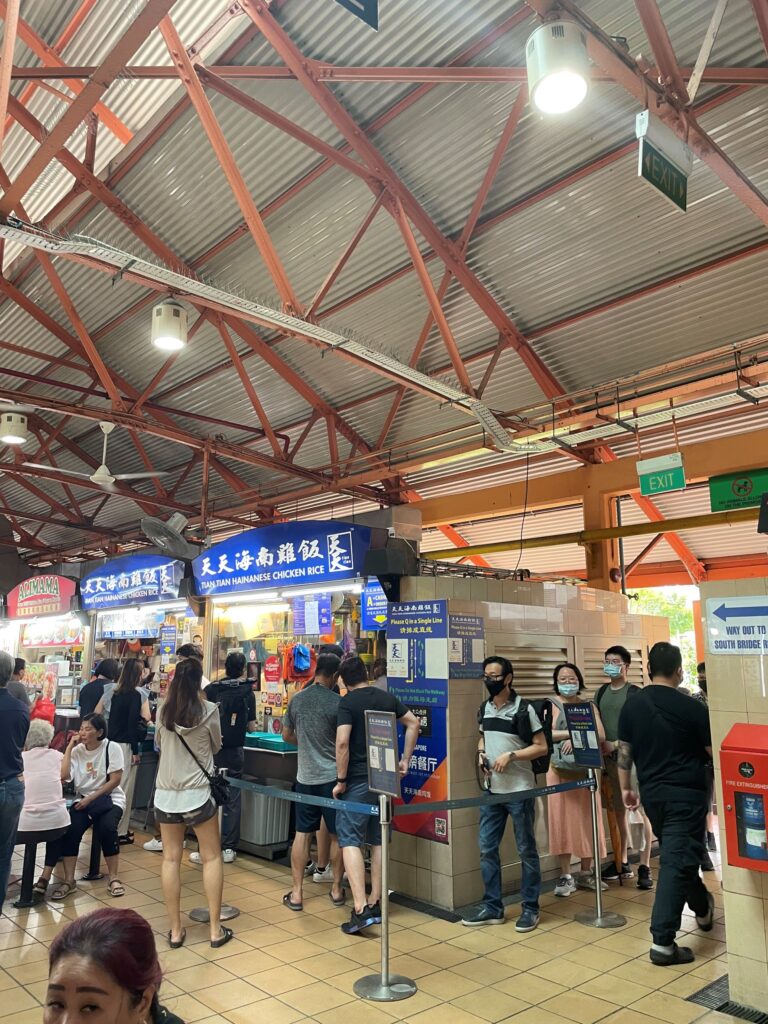
If you’re looking to try the local cuisine, your first stop has got to be a hawker centre. These large complexes are full of countless colourful market stalls offering local food—from Chinese to Malay to Indian to Singaporean— at a fraction of the cost of a restaurant. We’re talking whole meals for $5 SGD (£3 GBP/$3.50 USD).  

With so many stalls and food options on offer, it can be difficult to know where to start at a Hawker Centre, but the general rule of thumb is to just join the stall with the largest queue and you’ll be onto a winner. You’ll also find it useful to know that:
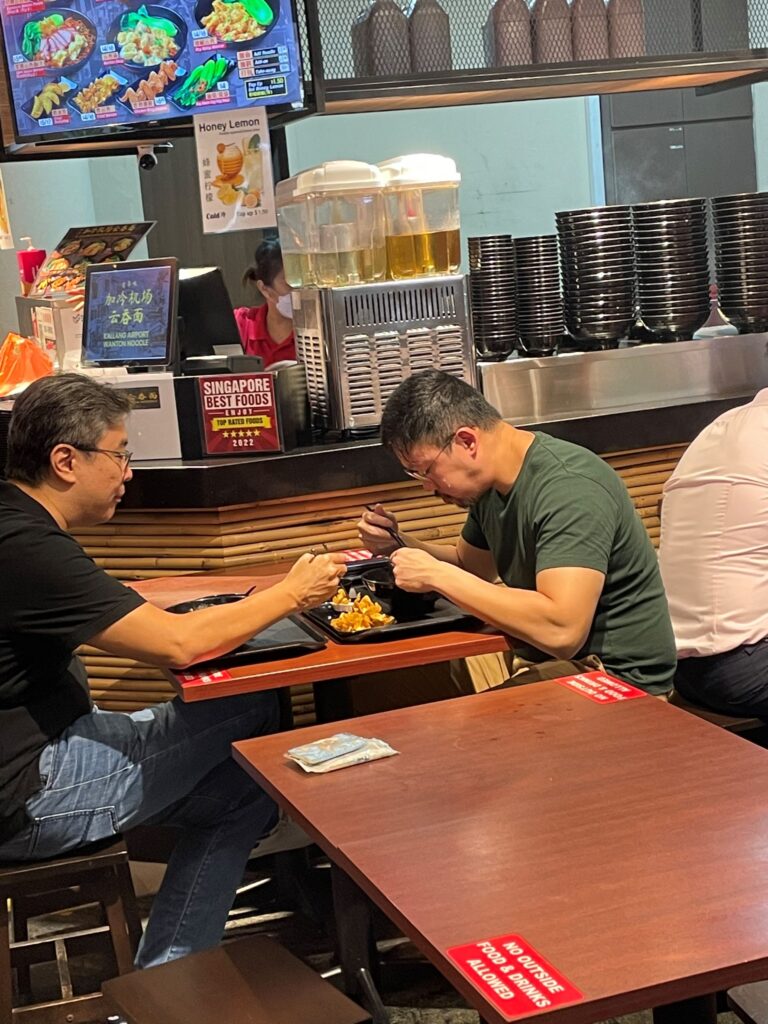
Two individuals dine at a casual eatery with menu displays and beverage dispensers in the background.

  • Seating is first come first served, but it's commonplace to reserve a seat with…a pack of tissues. I LOVE this rule.
  • Hawker centres typically only accept cash
  • Always place your tray or plate in the designated areas and clean up after yourself. You will also need to be aware of where you leave your tray to respect Islamic halal dietary requirements.  
  • It can get busy and overwhelming for a foreigner, but my advice is to just embrace it in all its colorful madness.

If you’d feel more comfortable going to a restaurant or a café, fret not because there are hundreds of delicious eateries dotted all around the city, all of which I have of course made full use of during my time here. Some of my favourite restaurants and hawker centres so far include:

  • People’s Park China Town— hawker centre
  • Tekka Centre Little India— hawker centre— go on a Saturday to experience it in its full glory
  • Curry Village— laidback Indian restaurant with river views and an amazing $10 lunch deal
  • Lau Pa Sat— go after work as it’s not open during the day
  • Toast Box— easy-going café chain that serves traditional toast, coffee and other traditional food  
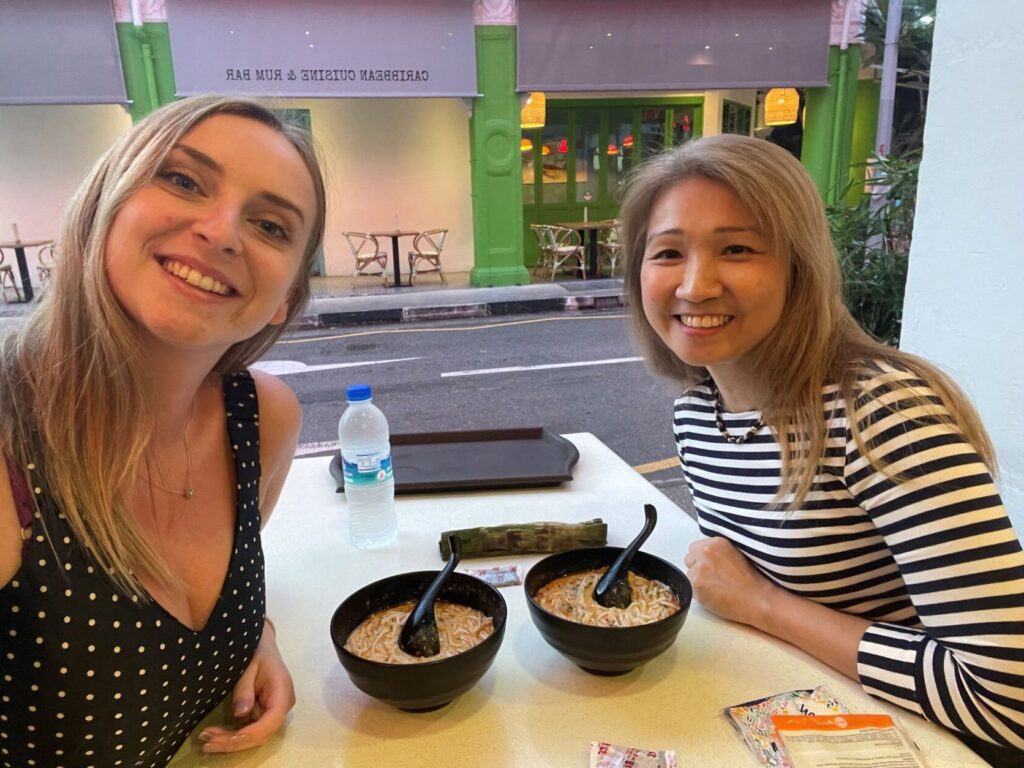
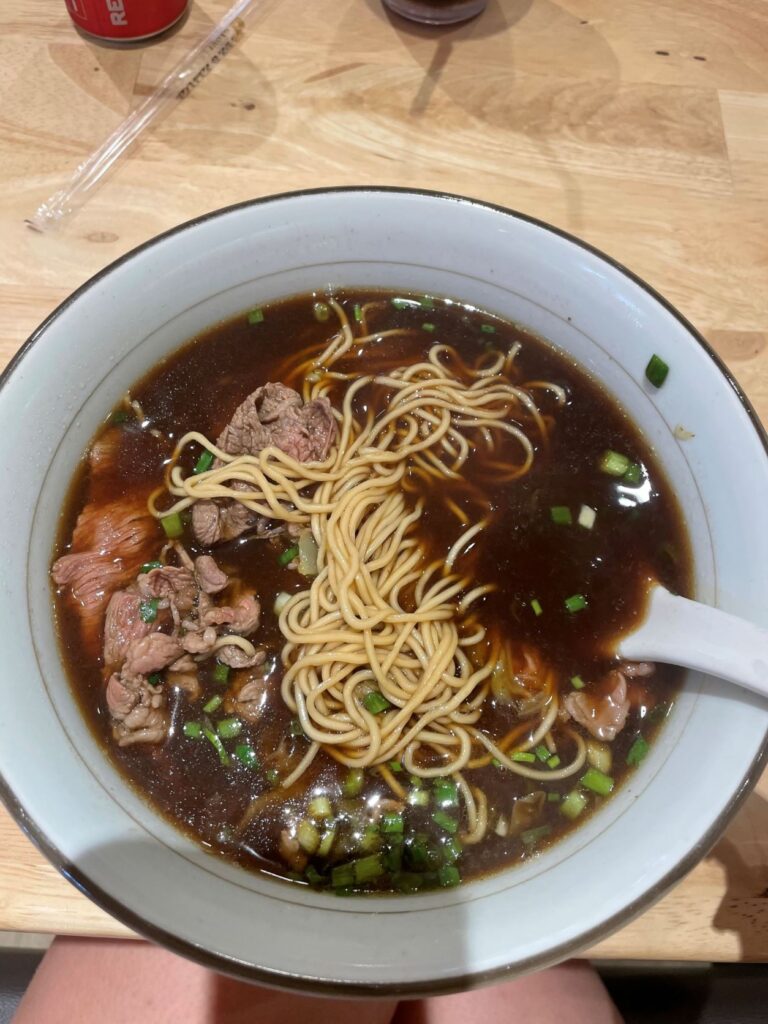
  • LeNu Chef Wai’s noodle bar— the best noodles I have ever had. Ever.  
  • 328 Katong Laksa— for a taste of Singapore’s famous Laksa  
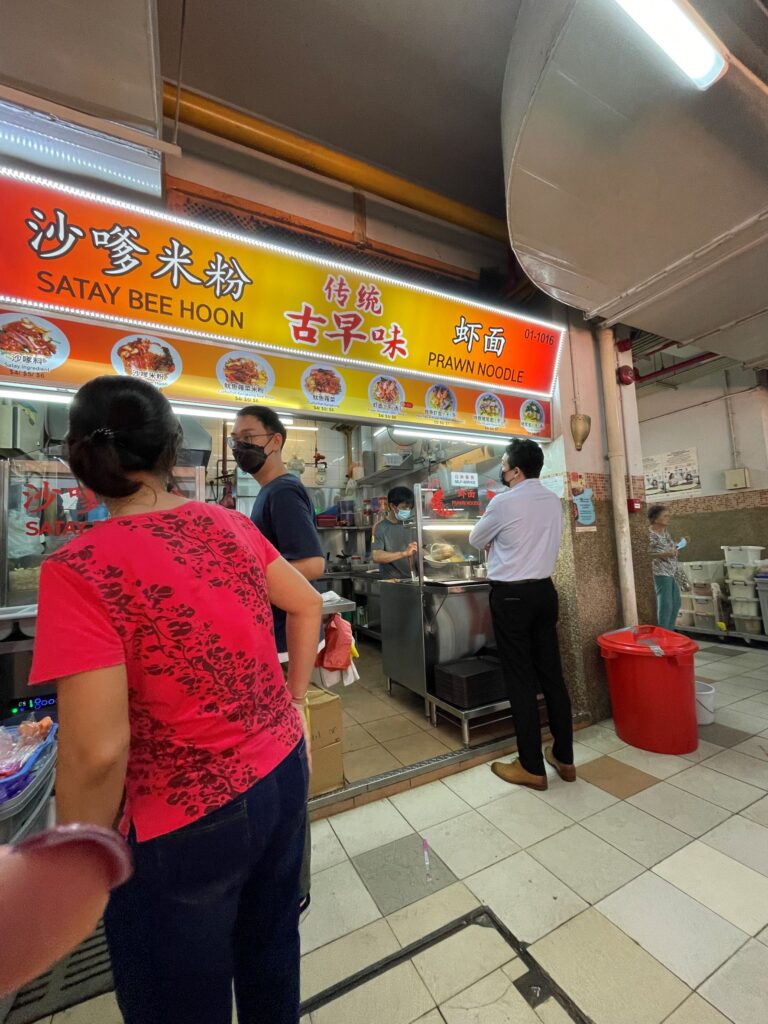
A hawker stall offers satay bee hoon and prawn noodles, with customers waiting in line to order. A riverside meal featuring Indian cuisine on a sunny day with historic buildings in the background. A bustling hawker center with patrons queuing at Tian Tian Hainanese Chicken Rice stall. Two bowls of noodle soup on a table with a water bottle, set against a street view with colorful storefronts. A bowl of beef noodle soup with dark broth, garnished with scallions on a wooden table.

So there you have it, the downlow of the essentials of how to best navigate your first week or so living as an expat in Singapore. I sincerely hope this guide has given you some insight, and a dash of excitement, into just how exhilarating it is to live and work in this incredible city— it’s been a truly unforgettable experience so far and I can’t wait to share more about my experience in series three. Stay tuned!


Check out the next blog in this series here: A Guide to Travelling and Working in Singapore

Our friendly team is on hand to discuss your furnished apartment requirements today.

Contact Us

Related Articles

A majestic view of the Taj Mahal framed by an intricately carved archway, showcasing its grandeur.
For Corporates

Serviced Apartments vs Hotels in India: Which is Better for Business Travel

A person calculates on a smartphone while reviewing documents at a wooden desk.
For Corporates

State of the Stipend: Lump Sum vs. Managed Corporate Housing

A firefighter battles smoke and flames amid the charred remains of a structure in a rural area.
For Corporates

Disaster Recovery: What the Last 5 Years Taught Us About Business Travel Safety

Get More Insights
person packing for trip

Must-Bring Items

Vacuum bags

Need to pack a hefty coat or jacket, or even a puffer? Use vacuum storage bags to compress them so they don’t take up your whole suitcase. Most come with a small hand pump, perfect for travel.

Noise-canceling headphones

Just like at home, there’s never a guarantee that your workspace during travel will be quiet. Thankfully, you don’t have to don a clunky pair of bucket-style cans: today’s noise-canceling headphones are slim and sleek. Get yourself a pair of AirPods Pro, Bose QuietComfort® Earbuds, or any of these alternatives.

Laptop stand

A laptop doesn’t have to be on your lap, or even flat on a surface. Being able to elevate and adjust your laptop can vastly improve your ergonomics while on the road, and you can do so with a laptop stand. The one appearing most frequently on digital nomad blogs is the Roost V3, or any similar products by Roost.

A woman sits on a couch with a laptop, surrounded by plants and a cozy, well-decorated interior.

Wireless mouse

Using a mouse can make all the difference when it comes to precision and dexterity on your laptop. Stay minimalist and go with a wireless one, for which you can’t beat Logitech. Your filthy touchpad will thank you.

Long charging cables

Most of us have a standard 1-meter charging cable for our smartphone, but savvy travelers know to pack a 2-meter or even a 3-meter cable as well. You never know where your nearest outlet is going to be, and we all love being able to use our phone in bed while charging it.

A woman works on a laptop in the backseat of a car, with a green bag and notebook beside her.

Getting Around

On an extended stay business trip, the travel doesn’t end when you reach your destination. Here are some great solutions for transportation and finding your way around during your stay.

Turo

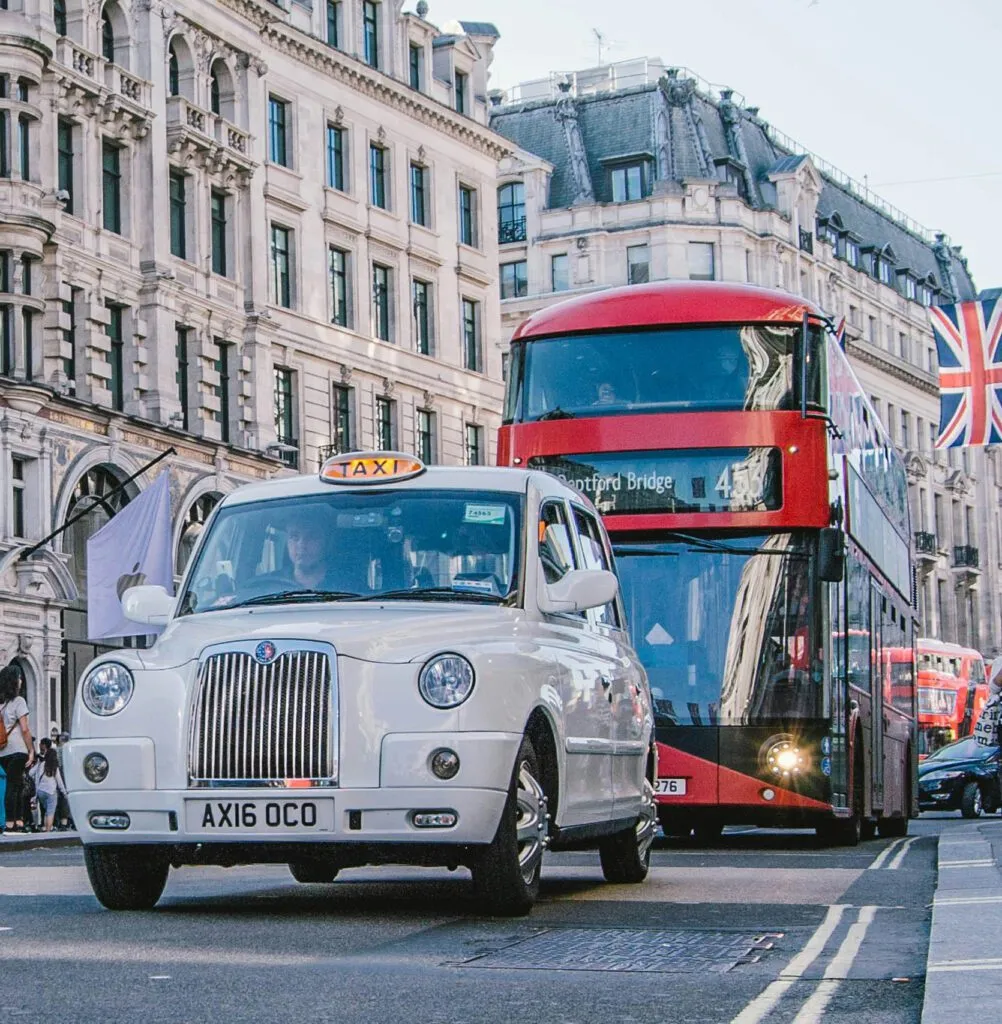
Looking for an alternative to traditional rental car companies? Turo is like Airbnb for cars, in that you rent a car directly from the car’s owner. It’s available in major cities across the US, as well as Vancouver, Montreal, Toronto and London (all cities Synergy serves, by the way!).

Uber One / Lyft Pink

We all know Uber and Lyft, but did you know they each offer memberships? Uber One is $9.99/month and gets you 5% off Uber rides, 5% off Uber Eats orders and other perks. Lyft Pink is $19.99/month and gets you 15% off Lyft rides, priority airport pickups and more. Use the services enough and the membership will pay for itself.

A white London taxi and a red double-decker bus navigate a busy street with historic architecture.

Google Maps (with a hack)

You can’t beat Google Maps for directions, especially when it comes to public transit. And there’s a great hack for international travel or poor reception: find out how to use the app offline. It’ll save you on international data fees – and frustration.

Rome2rio

Sometimes you just need to figure out the best way to get from point A to point B, but your usual maps application isn’t cutting it. Rome2rio will help you plan a route to where you need to be, even if it involves multiple modes of transportation: car, bus, train, bike, walking, ferry or plane.

A woman in a wheelchair holds a cup while seated at a table with a laptop in a bright café.

Work & Productivity

Put the “business” in business travel with the help of these resources for working on the go.

ExpressVPN

Using a virtual private network, or VPN, is a good idea no matter where you’re working from. When traveling for work and using unfamiliar WiFi networks, like in a hotel or coffee shop, it’s even more important.

ExpressVPN is a favorite among many, not just digital nomads. It costs as little as $8.32/month, and is a frequent advertiser on podcasts – listen in to your favorites and look out for a discount code. NordVPN also tops many lists.

Workfrom

A change of scenery from time to time is a great way to keep the creative juices flowing and break up your workday. When the need arises, use the search functionality offered by Workfrom, which allows you to find places to work nearby! You can filter by which establishments have power outlets, fast WiFi, late-night hours and more.

A group collaborates at a wooden table with documents, tablets, notebooks, and coffee mugs.

World Time Buddy

What time is it? What day is it? Business travel across time zones can be disorienting, and it’s important to know your local time and that of your colleagues.

World Time Buddy is a popular solution that allows you to see world times in a simple visual format, convert time zones and even schedule meetings. No more accidentally Slacking your coworker when it’s 2am where they are.

Google Workspace

Most of us are familiar with Google Docs, Sheets, Slides, etc. However, you’d be amazed by how many (free!) apps and tools Google Workspace offers, all cloud-based, including but not limited to:

  • Google Drive – Cloud storage up to 1TB
  • Google Flights – Search for flights across multiple airlines, all at once
  • Google Calendar – Create shared calendars
  • Google Meet – Video and voice calls
  • Google Forms – Generate and distribute simple forms or surveys
  • Google Keep – Maintain notes, lists, photos, audio, drawings and more

All of these apps can be accessed on desktop or mobile, for the ultimate on-the-go productivity.

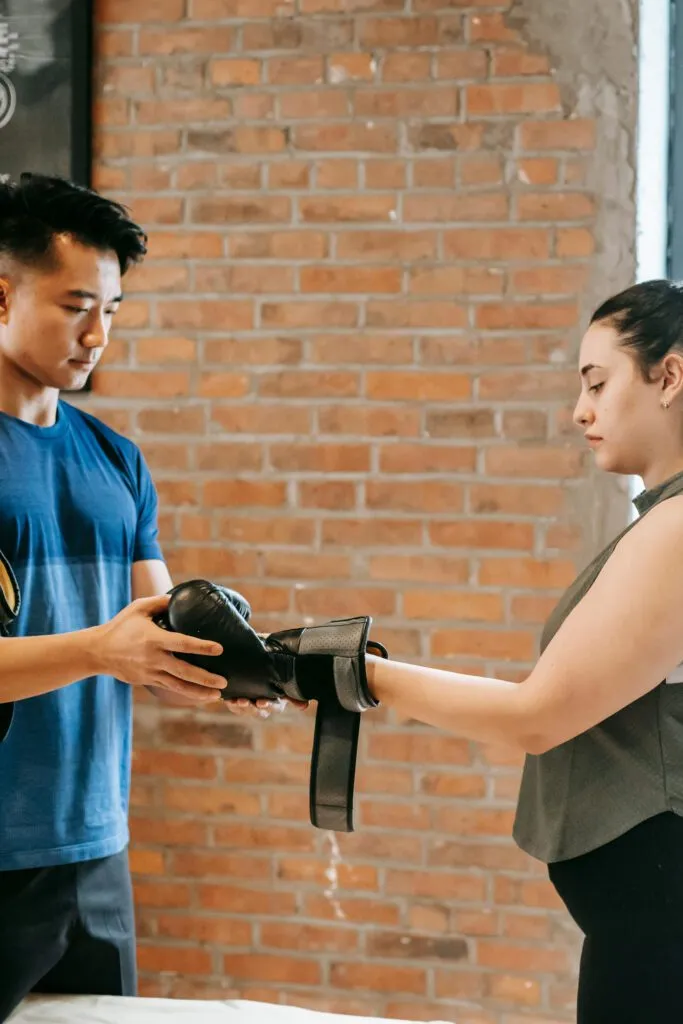
Two individuals exchange boxing gloves in a brick-walled room, suggesting a training or workout session.

Health & Wellness

Work-life balance still matters when you’re on business travel. Stay physically and mentally well while away from home with these resources.

Classpass

Although it’s evolved a bit over the years, Classpass is still going strong. Here’s how it works: first, choose a plan that allots you a number of credits per month, ranging from 6 to 80 credits. Then, use your credits to attend classes at local fitness establishments (yoga, spin, crossfit, etc.) or for open gym time.

Here’s the best part: you can also use credits for beauty and wellness treatments, such as manicures, haircuts or massage! Participating establishments are located all over the world, so it’s great to use while traveling.

Teladoc

Ask your healthcare provider if they offer Teladoc, or a similar telehealth service. It’s a tremendous benefit during travel when you need to speak with your doctor, and you can usually secure an appointment on short notice – even same-day. If you need medication, your provider can prescribe you what you need via video call and have it sent to a local pharmacy.

Calm

Move over Headspace, hello Calm. This increasingly popular meditation app can help you get better sleep, reduce stress and anxiety, improve your focus and more. Plus, who wouldn’t want to drift off to a calming Sleep Story read by Matthew McConaughey? Try it free for seven days, after which a premium subscription is $14.99/month.

A woman prepares food in a cozy kitchen with wooden cabinets and white tiled walls.

Food

Whether you prefer to go out, stay in or a little of both, these foodie and traveler-approved resources will keep you well-fed during extended stay business travel.

Eater

You may think Yelp is the go-to site for finding the best local restaurants, but real foodies know that’s not the case. Many Yelp reviews are written by tourists, not locals, and people are generally more likely to write about negative experiences than positive ones on review sites. Instead, see if the city you’re staying in has an Eater site. Eater has a pulse like no other on local restaurant scenes, from ethnic eateries to fine dining.

The Infatuation

The Infatuation is another great food site for honest reviews, guides and features on local restaurants. With coverage in nearly 50 cities, including international ones, there’s even more to love. Follow them on Instagram, too – they have an account for almost every city they cover!

Meal kit delivery services

Those staying in a serviced apartment or other extended-stay housing are fortunate to have access to a full kitchen. Being able to cook your own meals is a huge plus, and meal kit delivery services can make it a whole lot more convenient. The ingredients for each meal come in just the right amounts, so you’re not stuck buying a bundle of carrots when all you need is a single carrot. Travel blogger Cory Lee lists even more reasons it’s great for digital nomads and extended stay business travelers. There are too many options to name just one, so check out Bon Appétit’s top favorites.

Three women in hijabs sit on a park bench, conversing and holding coffee cups amidst greenery.

Community

Creating a sense of community is worth the effort no matter where you are, and for how long. Use these tools to help you connect with others during your travels, either online or in-person.

Reddit

Reddit is one of the best places on the internet for people from all over to discuss topics and share resources. Because it’s less commercialized, you’ll find some of the most honest and real insights. Topics are divided into what are called subreddits.

For instance, there’s a subreddit on business travel, one on travel hacks and one for digital nomads. You can also find subreddits for almost any country, city or neighborhood in the world. Just use Reddit’s search bar to find subreddits, or individual posts.

Meetup

Who says you can’t make friends during business travel? It’s important to socialize and meet new people outside of work, even in a city you’re only staying in temporarily. Meetup is where people go to do just that. Use the site or the app to find in-person meetups near you, or host your own!

Nextdoor

You may use Nextdoor at home, but why not use it away from home too? Download the app and find the neighborhood you’re staying in, then get to know your temporary neighbors and the community. Members use it to share information and resources, ask question.

A traveler approaches an airport security checkpoint under directional signage.

Other

We couldn’t let you go without mentioning these resources, which can save you a lot of hassle.

Dark Sky

No one can perfectly predict the weather – but Dark Sky comes pretty close. The hyper-accurate, hyper-local weather app can tell you down to the minute when to expect rain, snow, sun, clouds, etc.

When you’re traveling and unfamiliar with the local climate, this level of accuracy is key. You can even enable push notifications to know just when to whip out your umbrella. Dark Sky is $3.99 to download, and only available on iOS.

CLEAR

You may have noticed lately that TSA PreCheck lines at airports are getting longer and less efficient. Due to its popularity, PreCheck’s benefit of shorter, smoother security lines is beginning to dwindle. It may be time to upgrade to CLEAR, which allows you to confirm your identity via biometrics rather than traditional ID documents. CLEAR operates in over 50 airports throughout the US, and its lines tend to be shorter than those for PreCheck. An annual membership is $189, a bit more than TSA PreCheck, but some credit card reward programs offer a complimentary or discounted membership.

From the Diary of An Assignee in Singapore — Series Two

Welcome back to series 2 of 3 of the diary of an assignee in Singapore! In case you haven’t read the first series yet, I’m Laura and I’ve been assigned to live and work in Singapore for a month. I’ll be using this platform to share my experiences with those of you lucky people who might move to Singapore for a short-term stay assignment, relocation or business trip in the near future, sharing my experiences challenges and tips along the way.  

Ready? Let’s get into it.  

Two weeks or two years?

So I’m officially two weeks into my trip already (time does fly when you’re having fun), and I can’t quite believe how fast I’ve settled in. I think it’s because life in Singapore is just so…livable. It’s a small city. It’s clean. It’s safe. It’s easy to get around. The standard of serviced apartments in Singapore is excellent and there’s a thriving expat community. It’s essentially a business traveller’s haven here.  

Woman in a blue dress stands on a balcony overlooking a cityscape with greenery and tall buildings.

First thing first— get yourself connected

If you’re moving to Singapore for business, regardless of the duration of your stay, I’d 100% recommend you buy your own sim card.  

Whether you’re mapping yourself to a new office for a meeting or ordering a Grab (Singapore’s equivalent to Uber) to avoid any heavy downpours of rain on the way to a business meeting, or gaining access to an office building as a visitor, you’ll find it a hell of a lot easier if you can do it all without relying on WiFi. You can rely on the WiFi across the city if you’d prefer, but for the sake of efficiency and avoiding running into any challenges prior to a business meeting, my recommendation is don’t take any chances and just get yourself a sim— punctuality to business meetings is important in Singapore.  

You can get your sim card from the airport when you arrive, or you can do what I did and get one from any 7Eleven which offers a much better deal. I paid $15 for mine which gave me 100GB of internet for 28 days with a provider called Singtel. 7Elevens are everywhere, so it's highly likely you’ll find one just steps from your serviced apartment in Singapore.  

Entrance of a 7-Eleven store with promotional posters and glass doors displaying interior items.

Brush up on your office etiquette  

My first two weeks living in Singapore have consisted of meeting a lot of different people, whether that be the Synergy APAC team, visiting our client's offices, or meeting our supply chain partners and their wonderful apartments across the city. To say I have seen a lot of what I read online about office etiquette and life in Singapore come into play here would be an understatement— below are the essentials you’ll need to know when moving to Singapore for business.  

Hierarchy is everything—everyone has a distinct place within businesses in Singapore, and the seniors must always be treated with the utmost respect. The same goes for expats in Singapore. Some tips include:

  • Always let the person with the highest rank make the initial introduction, let them take the lead at a business meeting and follow suit.  
  • At a business dinner, don’t pick up your cutlery and start eating until the most senior person at the table has done so first.
  • Avoid giving overtly negative feedback, especially to a senior— saving face is very important in Singapore.

The handshake is a common greeting, and adding a slight bow will be appreciated.

Always be on time— punctuality is essential.

Office wear is your typical western, smart-casual attire, but be sure to check with your company first as some offices prefer to be more formal than others.

A group of people outdoors posing with peace signs near a modern urban setting and parked cars.

Business cards are a very important part of doing business in Singapore. You should take and receive the card with both hands and take a few seconds to observe the card.

Gift-giving is big here. When you present and receive a gift, make sure to do so with both hands. If you are receiving a gift, don’t open the gift until the gift giver leaves.  

Office hours are usually around 9-6pm or 7pm. The Singaporeans are hard workers, but they do also make use of their lunch hour, typically with a large meal.

Business is typically conducted in English, but be prepared to hear many languages spoken in the office, including Mandarin Chinese, Singaporean Chinese, Malay or Tamil. Due to the mix of cultures in Singapore, you’ll likely also work alongside many Buddhists, Muslims or Christians and should be respectful of any religious standards they practice.  

“Singlish” is common—and you’ll probably struggle to understand it! One thing that definitely caught me off guard was Singlish (a mixture of English and Chinese/Malay). I had heard of it. I knew what it was. But my goodness did I underestimate how little I would understand. You can brush up on your Singlish here, lah.  

Bring Your Appetite  

So you’ve navigated your first day in the office, you’re feeling a little bit peckish and to your pleasant surprise, you’ve found that Singaporeans love food just as much as you do—seriously, there are an obscene amount of eateries here.  

Serviced accommodations in Singapore are usually fully furnished and come with a fully-equipped kitchen or at least a kitchenette. This is great for anyone looking for that added flexibility to eat in and out as and when they please, but it goes without saying that it’s an absolute must you try the local food as an expat in Singapore. It would be rude not to, right?

Where to find the best eateries when living in Singapore

Everywhere. They’re everywhere. On side streets, underground, in shopping malls, dedicated food courts and just about everything in between. You’ll be able to find something for pretty much everyone, and with any budget, within steps from your office or serviced apartment in Singapore.  

Hawker Centres

If you’re looking to try the local cuisine, your first stop has got to be a hawker centre. These large complexes are full of countless colourful market stalls offering local food—from Chinese to Malay to Indian to Singaporean— at a fraction of the cost of a restaurant. We’re talking whole meals for $5 SGD (£3 GBP/$3.50 USD).  

With so many stalls and food options on offer, it can be difficult to know where to start at a Hawker Centre, but the general rule of thumb is to just join the stall with the largest queue and you’ll be onto a winner. You’ll also find it useful to know that:

Two individuals dine at a casual eatery with menu displays and beverage dispensers in the background.

  • Seating is first come first served, but it's commonplace to reserve a seat with…a pack of tissues. I LOVE this rule.
  • Hawker centres typically only accept cash
  • Always place your tray or plate in the designated areas and clean up after yourself. You will also need to be aware of where you leave your tray to respect Islamic halal dietary requirements.  
  • It can get busy and overwhelming for a foreigner, but my advice is to just embrace it in all its colorful madness.

If you’d feel more comfortable going to a restaurant or a café, fret not because there are hundreds of delicious eateries dotted all around the city, all of which I have of course made full use of during my time here. Some of my favourite restaurants and hawker centres so far include:

  • People’s Park China Town— hawker centre
  • Tekka Centre Little India— hawker centre— go on a Saturday to experience it in its full glory
  • Curry Village— laidback Indian restaurant with river views and an amazing $10 lunch deal
  • Lau Pa Sat— go after work as it’s not open during the day
  • Toast Box— easy-going café chain that serves traditional toast, coffee and other traditional food  
  • LeNu Chef Wai’s noodle bar— the best noodles I have ever had. Ever.  
  • 328 Katong Laksa— for a taste of Singapore’s famous Laksa  
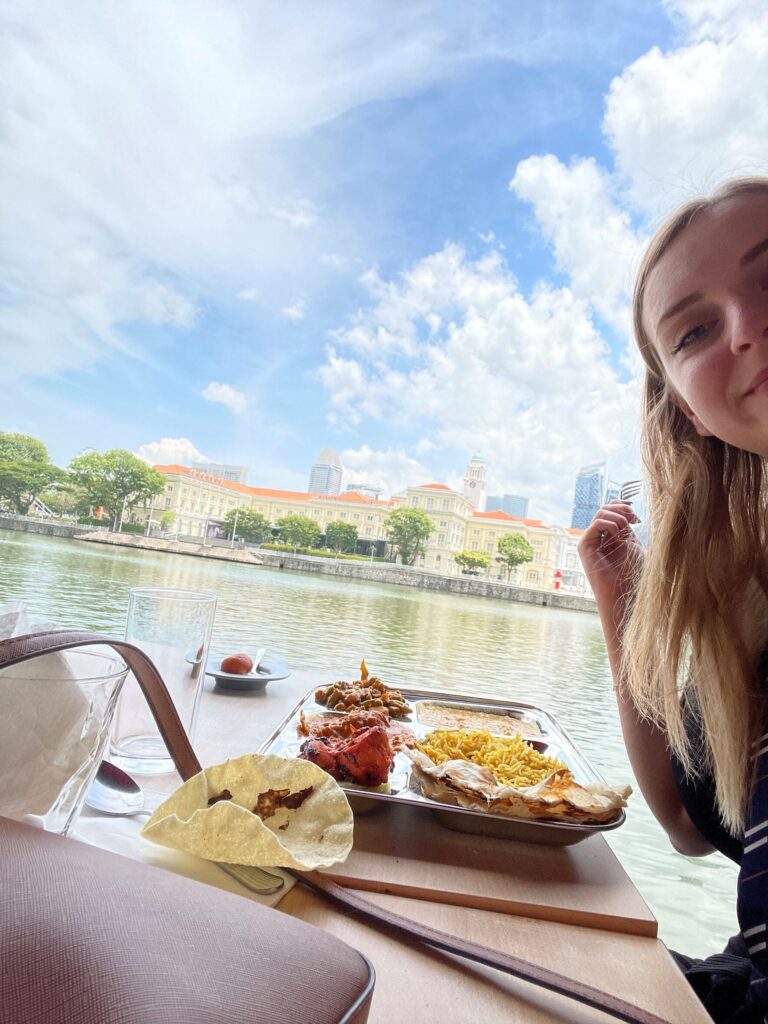
A hawker stall offers satay bee hoon and prawn noodles, with customers waiting in line to order. A riverside meal featuring Indian cuisine on a sunny day with historic buildings in the background. A bustling hawker center with patrons queuing at Tian Tian Hainanese Chicken Rice stall. Two bowls of noodle soup on a table with a water bottle, set against a street view with colorful storefronts. A bowl of beef noodle soup with dark broth, garnished with scallions on a wooden table.

So there you have it, the downlow of the essentials of how to best navigate your first week or so living as an expat in Singapore. I sincerely hope this guide has given you some insight, and a dash of excitement, into just how exhilarating it is to live and work in this incredible city— it’s been a truly unforgettable experience so far and I can’t wait to share more about my experience in series three. Stay tuned!


Check out the next blog in this series here: A Guide to Travelling and Working in Singapore

Our friendly team is on hand to discuss your furnished apartment requirements today.

Contact Us

Related Articles

A majestic view of the Taj Mahal framed by an intricately carved archway, showcasing its grandeur.
For Corporates

Serviced Apartments vs Hotels in India: Which is Better for Business Travel

A person calculates on a smartphone while reviewing documents at a wooden desk.
For Corporates

State of the Stipend: Lump Sum vs. Managed Corporate Housing

A firefighter battles smoke and flames amid the charred remains of a structure in a rural area.
For Corporates

Disaster Recovery: What the Last 5 Years Taught Us About Business Travel Safety

Get More Insights

What About Accommodations?

For extended stay business travel, a hotel may not cut it. Most of them are not well suited for long-term stays, containing little more than a bed, bathroom, nightstand and dresser. Let us key you in on another extended stay travel secret: serviced apartments.

They’ve got everything you need for a longer stay, and Synergy has them available all over the world. Search and book your accommodations and make your next business trip your most seamless one yet.

Property Search

Our friendly team is on hand to discuss your furnished apartment requirements today.

Contact Us

Rest assured,

Synergy has you covered.

A turquoise square icon featuring a minimalistic arrow pointing upward.

Robust data security

We have worked relentlessly to secure ISO 27001:2022 certification, the gold standard in global data security practices. This gives you absolute confidence that we uphold the most stringent standards of data security, and that your sensitive information is safeguarded to the highest possible degree.

Health & Safety

SynergySMART (Simple Mobile Apartment Reporting Technology) is a cloud-based application that facilitates the tracking and measurement of Synergy’s health, cleanliness and safety protocols across our global apartment inventory. A first of its kind in the accommodation sector, SynergySMART aims to elevate the level of consistency across our global portfolio to ensure guest satisfaction and traveler confidence.

Icon of a person wearing a graduation cap, symbolizing education or academic achievement.

24/7 support

By developing local teams with deep knowledge of their regions allows us to seamlessly serve clients everywhere. Our 24/7 regional teams are the cornerstone of Synergy's renowned guest support, but it's our real-time communication that truly sets us apart. We collaborate directly with clients, ensuring immediate responsiveness and adaptability in any market situation. This level of transparency and partnership creates lasting value for every guest.

Our friendly team is on hand to discuss your furnished apartment requirements today.

Contact Us

Related Articles

A festive crowd celebrates St. Patrick's Day, adorned with green hats and Irish-themed accessories.
Guest Experience

The Ultimate Dubliner's Guide to St. Patrick's Day

Read More
Big Ben and Westminster Bridge at sunset, reflecting on the calm waters of the River Thames.
Guest Experience

Relocation Guide: Moving to London

Read More
Two people shop online using a laptop, with tea and snacks on a wooden table.
Guest Experience

Top Cybersecurity Tips Every Business Traveler Should Know

Read More
A cityscape featuring the Empire State Building, surrounded by skyscrapers at sunset.
Guest Experience

Relocation Guide: Moving to New York City

Read More
Houston skyline at sunset, with golden reflections on skyscrapers and a vibrant sky backdrop.
Guest Experience

Relocation Guide: Moving to Houston

Read More
A woman packs clothes into a green suitcase on a bed in a cozy, wooden-furnished room.
Guest Experience

Preparing to Relocate for an Internship

Read More
Chevron as Font
Chevron as Font

Related Articles

A festive crowd celebrates St. Patrick's Day, adorned with green hats and Irish-themed accessories.
Guest Experience

The Ultimate Dubliner's Guide to St. Patrick's Day

Read More
Big Ben and Westminster Bridge at sunset, reflecting on the calm waters of the River Thames.
Guest Experience

Relocation Guide: Moving to London

Read More
Two people shop online using a laptop, with tea and snacks on a wooden table.
Guest Experience

Top Cybersecurity Tips Every Business Traveler Should Know

Read More
A cityscape featuring the Empire State Building, surrounded by skyscrapers at sunset.
Guest Experience

Relocation Guide: Moving to New York City

Read More
Houston skyline at sunset, with golden reflections on skyscrapers and a vibrant sky backdrop.
Guest Experience

Relocation Guide: Moving to Houston

Read More
A woman packs clothes into a green suitcase on a bed in a cozy, wooden-furnished room.
Guest Experience

Preparing to Relocate for an Internship

Read More
Chevron as Font
Chevron as Font